Jesus' Path to the Cross

"As the time approached for him to be taken up to heaven, Jesus resolutely set his face to go to Jerusalem." (Luke 9:51)
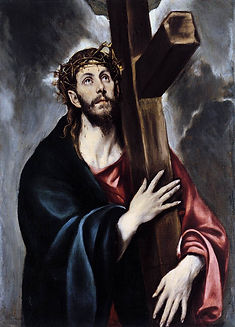
From the moment his ministry officially began at around age thirty, Jesus spoke often of his certain crucifixion. He first alluded to it after driving the merchants out of the Temple, challenging officials to “destroy this temple” (referring to his body) so he could raise it up in three days. Later, his declaration to Nicodemus—that the Son of Man must be “lifted up” just as Moses lifted the snake in the wilderness—surely captured the full attention of this scriptural scholar. It was a profound foreshadowing that the one who brings life would first have to endure the appearance of a curse.
As his ministry progressed, Jesus offered crystal-clear predictions of his fate. He told his disciples that it was "necessary" for the Son of Man to suffer, be killed, and be raised. When Peter protested, Jesus’ sharp rebuke—"You are not thinking about God's concerns"—underscored the absolute necessity of the sacrifice. He later revealed even more harrowing detail to his startled disciples, prophesying that he would be handed over to the Gentiles to be mocked, flogged, and crucified. He was preparing them for a reality they could not yet fathom: that victory would first look like defeat.
As the hour approached, Jesus moved with unmistakable intentionality. In Bethany, he framed a woman's gift of expensive perfume poured over his feet not as a waste, but as a noble preparation for his burial. At the Last Supper, he transformed the traditional Passover meal into a testament of his own coming sacrifice, even as he revealed the coming betrayal and abandonment by his own friends. Finally, in the Garden of Gethsemane, he wrestled with the imminent cup of suffering, ultimately submitting his human will to the Father’s divine plan, saying, "Rise! Let us go! Here comes my betrayer!"
Even during his trial, Jesus remained the true authority. He stood in a dignified, prophetic silence before his accusers, only speaking to assure Pontius Pilate that his worldly power “came from above” and that the crucifixion could not be stopped. Once nailed to the cross, Jesus remained sinless and focused on the needs of others—forgiving his executioners, offering paradise to a thief, and ensuring his mother was cared for by the "beloved disciple," John.
When he finally cried out, “My God, my God, why have you forsaken me?” it was not a cry of abandonment. Learned scribes standing near the foot of the cross would have instantly recognized these as the opening words of the Twenty-Second Psalm. Even in his moment of greatest agony, Jesus was identifying with David’s suffering while simultaneously pointing toward the ultimate triumph found later in that same Psalm: “All the ends of the earth will remember and turn to the Lord.” To his last breath, the Good Shepherd glorified the Father with great dignity, leaving us much to ponder this Good Friday.
Father, thank You for the commitment of Your Son and Our Savior, who walked the long sorrowful path to the cross with unwavering purpose for our sake. As we ponder His sacrifice, help us to align our own lives with Your divine will, even when the path ahead looks like defeat to the world. Grant us the grace to live as people of the "Twenty-Second Psalm"—anchored in Your Word during our deepest trials and confident in the triumph You have already secured. May the presence of the Good Shepherd in us be unmistakable, drawing others to the light of Your truth and salvation. Amen.
mgb


Comments